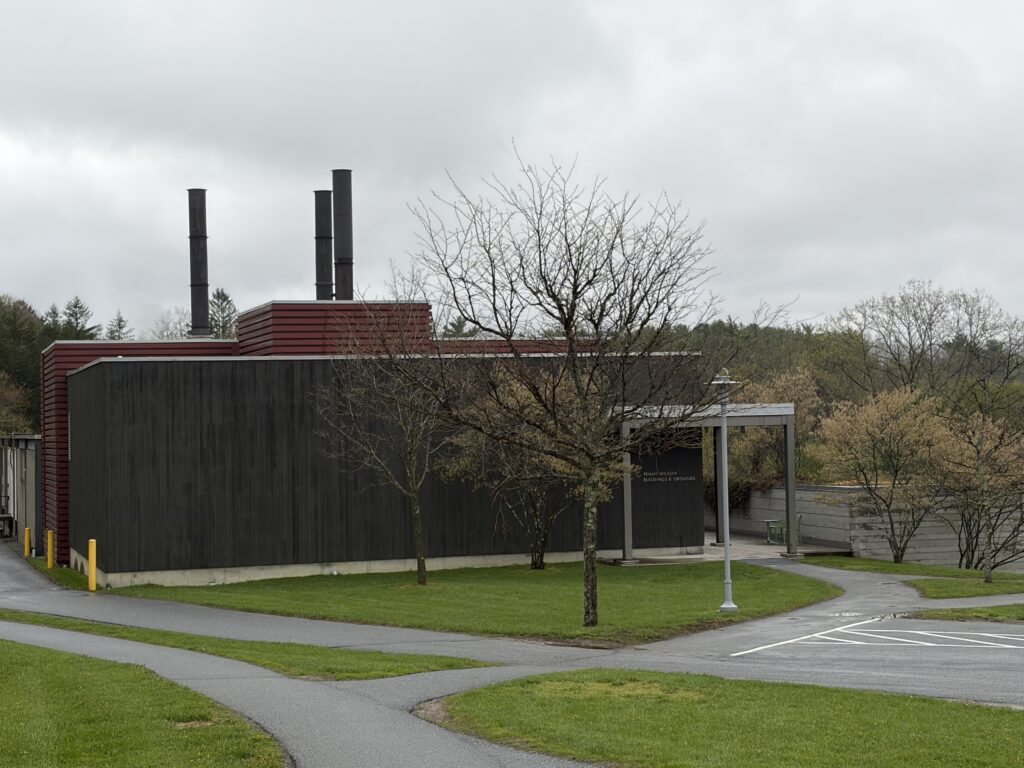
Spring on Bennington’s campus means that as outside temperatures erratically dip up and down, so do the climates of the houses and dorms. Students twist the knobs on their steam heaters, open their windows to the perfect amount and wear layers until they have to do it all over again the next day. It isn’t unheard of to have snow at Commencement.
85% of Bennington’s buildings on campus are powered by the Biomass plant housed in Buildings and Grounds. Built in 2008, it’s a reserved building at the southern edge of campus. The campus’ heat comes from woodchips, a switch that has saved the college on both energy and pollution.
“We used to burn 400,000 gallons of fuel oil,” Ricky Setzer, the Systems Manager and Chemical Hygiene Officer who has worked at the college since 2011 said. “Now we burn anywhere from 4,500 to 6,000 tons of wood chips. And it’s mixed. It’s supposed to be 80% hardwood and 20% softwood.”
Those wood chips are byproduct from logging and land clearing in the Adirondack Mountain range over the New York border, little tan fragments mixed with branches and other things left behind by the process. The silo that stores the wood chips before using them for fuel is able to hold about 35 tons of chips, or about 3 to 4 full truckloads that are delivered almost every day into the back of buildings and grounds.
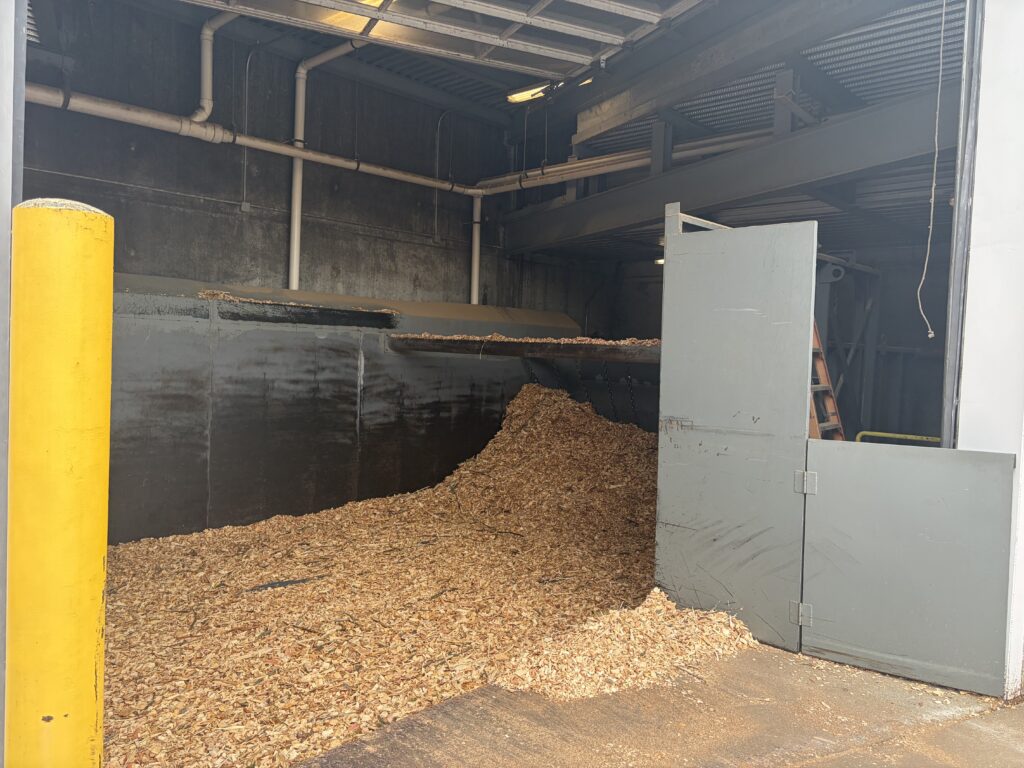
Tires, corn, coal, and wood pellets could also power the biomass plant with minor adjustments.
“This silo just is enough if it’s full before the weekend to get us through the weekend so we don’t have to work on the weekends,” Setzer said. Two people work full time on the biomass plant.
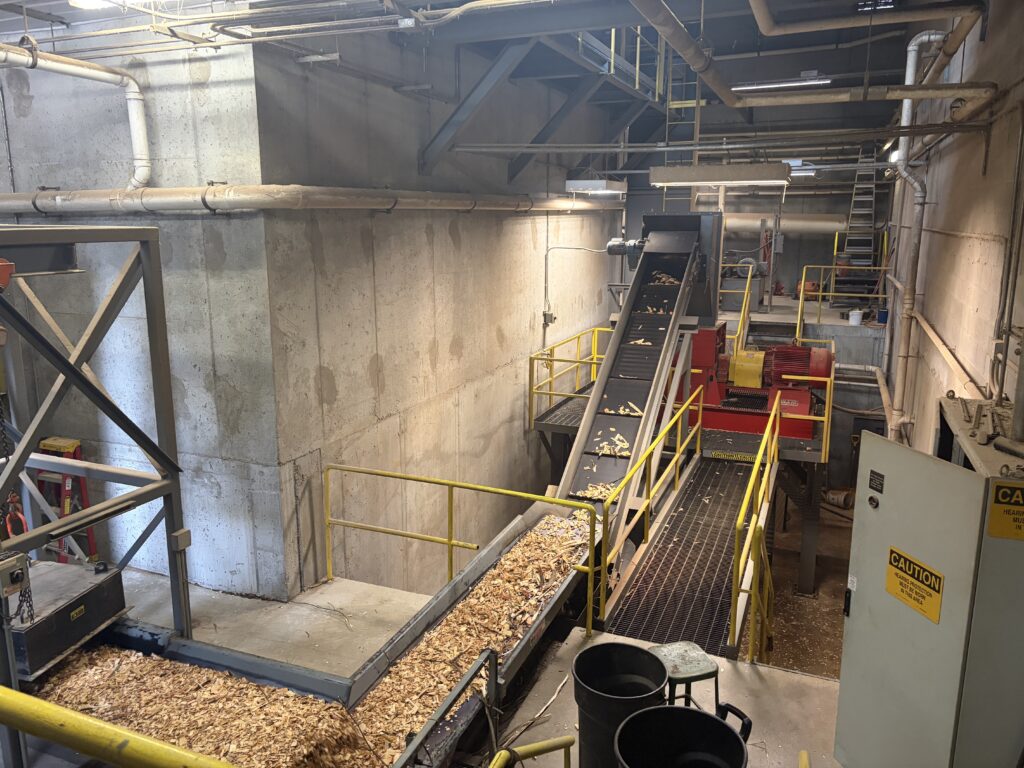
Before the chips make it to the boiler, they are crushed into smaller pieces by a hammer mill and a larger magnet on a conveyor belt extracts any other byproducts that can’t go into the boiler. The magnet used is powerful enough that it can interfere with sensors and cameras in modern phones if they’re close enough. Once Setzer stood close enough for the magnet to strip his credit card.
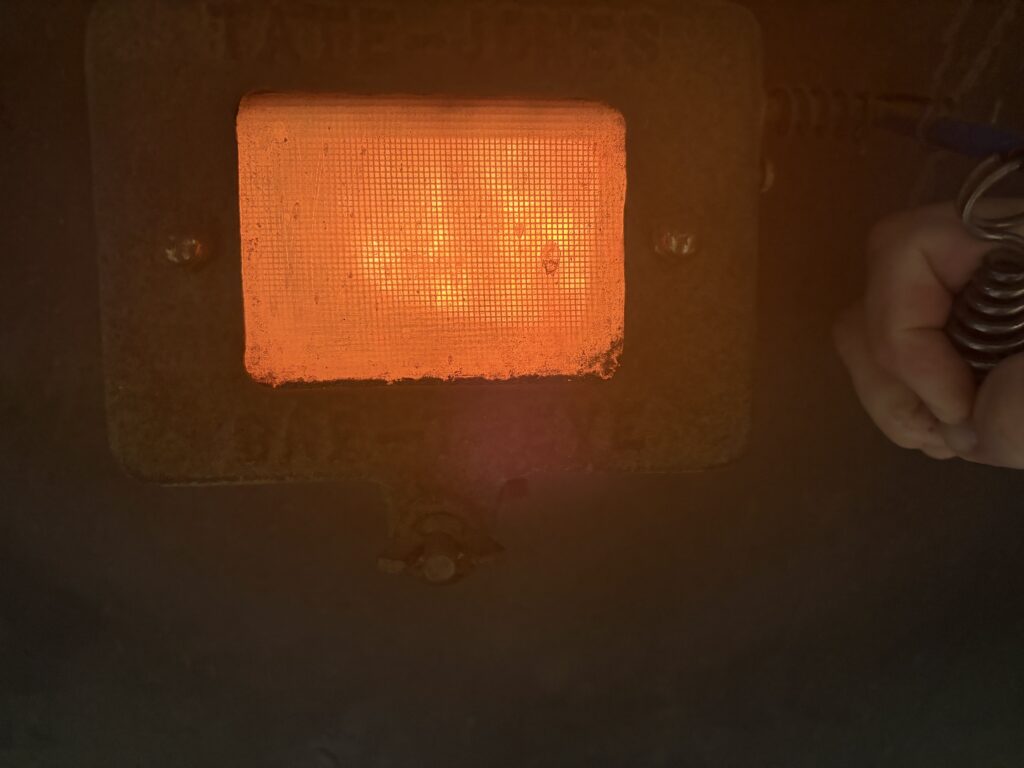
The processed chips fuel the boiler that produces the hot water necessary for steam. Walking down to the Bennington College Post Office, you might have seen the smoke stacks releasing vapor into the sky. That’s vapor from the boiler that heats the college. The boiler room itself is around 80 degrees and uncomfortable to stand in wearing anything heavier than an undershirt while the flame is going. Inside a little window is the flame of the boiler that looks like a giant roaring bonfire and heats at 1,400 degrees Fahrenheit.
Particulate matter produced by the combustion process is then filtered from the steam and sent to Whitman’s Feed Store in North Bennington, where it’s mixed with lime and sold to farmers to neutralize the pH balance in their soil, ending the road from the Adirondacks to Bennington.
From woodchips to the hissing cast iron radiator in Franklin, the college has roughly 2,000 feet of pipes that run throughout campus where the steam travels from the boiler. The banging sounds that occasionally come from below the floorboards and in the walls are the result of hot and cold air colliding like a thunderstorm.
The switch from oil heat to biomass heat is estimated to have reduced the College’s greenhouse gas emissions by almost 3,000 tons of carbon dioxide, estimated to be like “taking 600 cars off the road” according to the college’s website.
Deciding when to turn on the heating for campus is both an art and science for Buildings and Grounds who have to account for the Vermont weather patterns of Fall and Spring as well as what students are saying.
“It’s about a day, day and a half, to really get heat throughout all of campus,” Seltzer said. The B&G staff light the fire in the boiler by hand using kindling. “It takes some time to build it and you have to build it slow because heat [causes] expansion and contraction of the steel, you don’t want to go too fast.”
Spring in particular on campus means waiting for the hot days to finally outnumber the cool days. The exact day is never set in stone.
“Last year, I think, was like the 2nd week of May. This year we’re kind of watching it to see,” Setzer said.
Setzer says that beyond just weather, student feedback is also a part of the job. Students are able to email Buildings and Grounds to ask questions about the heating or give feedback on the temperature in the houses.
“If we realize that at 50 degrees, you guys don’t really need heat during the day, we can make things set back,” Setzer said, “And again, we want to make sure everybody’s comfortable.”








Be First to Comment