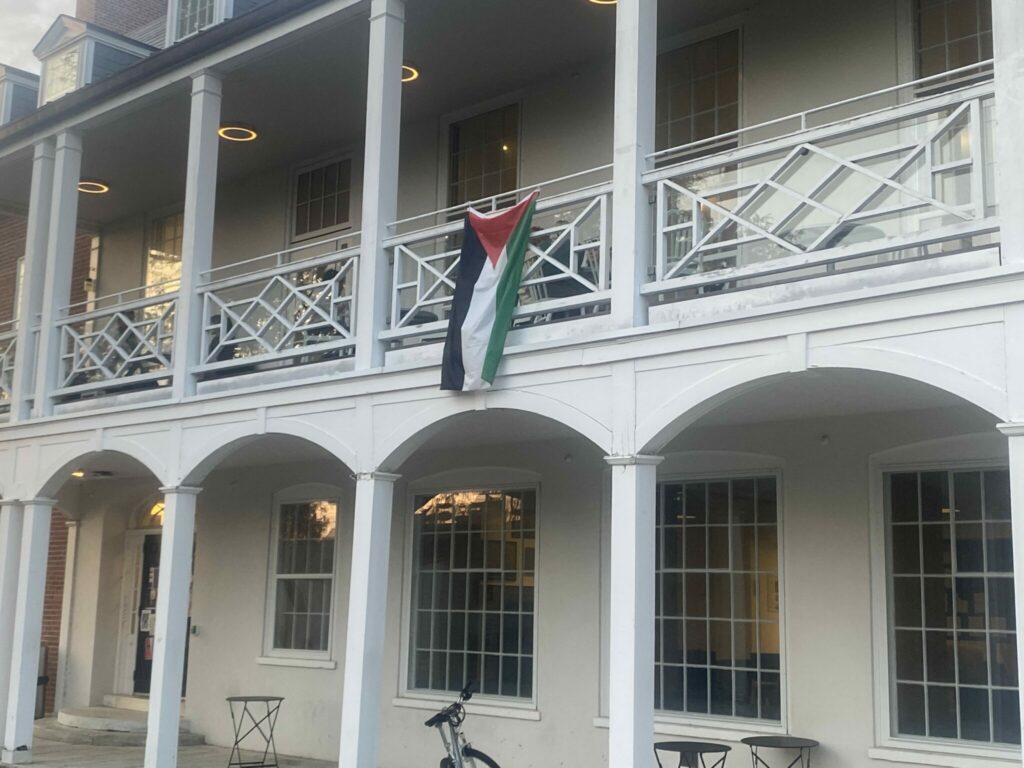
On November 11, an open “teach-in” organized by David Bond, professor in Society, Culture, and Thought at Bennington, was held in the Academic Barn with the intention of fostering discussion about Palestine among students.
The event, organized in response to the fragile ceasefire that went into effect in the Gaza Strip on October 10th, asked what it means to be a student, and what it means to be a student in the United States during the ongoing genocide.
The event started with Bond’s own pictures of South Lebanon, which he took on a trip in May 2023, traveling the length of the border with Israel. The villages he was traveling in “were now rubble,” he said.
The idea of a teach-in, Bond stated, goes back to the College Campuses of the 1960s, with one of the first organized by scholar Eric Wolf on the University of Michigan’s campus.
“What view of America comes into focus with the drones buzzing overhead, not only scooping up everyone’s data, but also testing new AI targeted strikes; what view of America comes into view under this occupation and these explosions?” Bond asked.
On October 7, 2023, Hamas-led militants killed 1,200 people in Southern Israel and took 250 hostages. Israel has since committed acts of genocide against Palestinians in the Gaza Strip, recognized by international human rights groups Amnesty International, B’Tselem, and Human Rights Watch, as well as the United Nations.This includes Israel’s usage of man-made famine as a genocide tactic, which has killed over 69,000 Gazans according to the Gaza Health Ministry. Even after the fragile ceasefire has gone into effect, Israel has violated the terms of the agreement at least 282 times, according to Al-Jazeera.
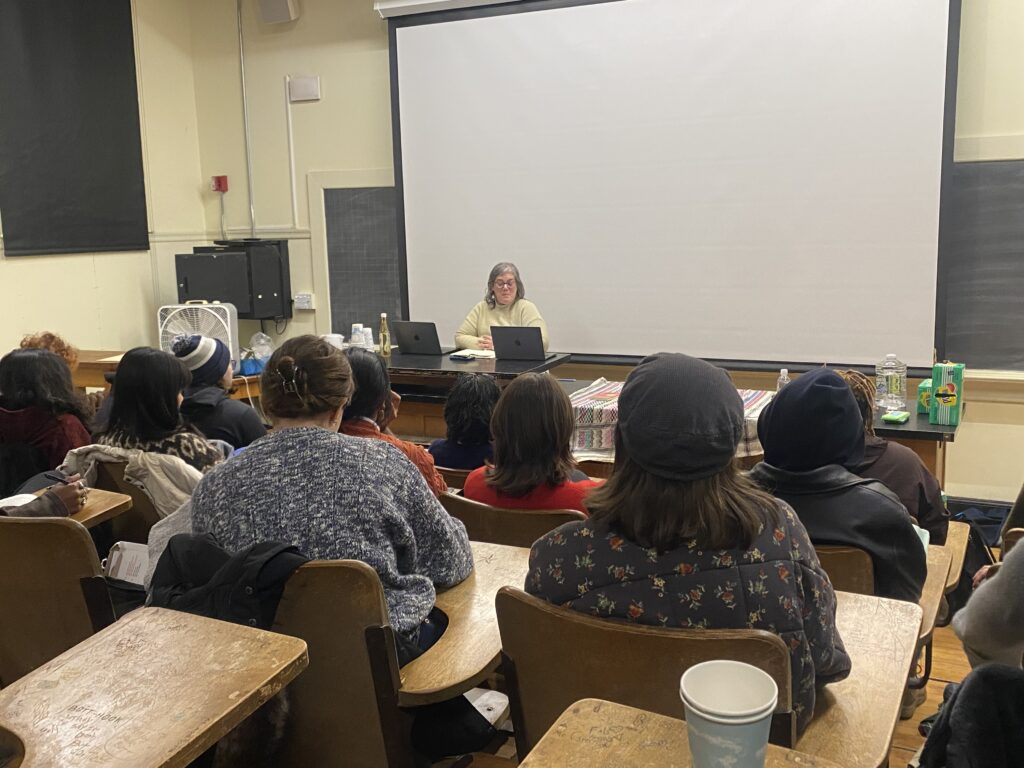
Faculty David Bond, Franny Choi, An Duplan, Andy Galindo, and Mariam Ghani each talked with the crowd of students in Barn 100, sharing their own perspectives and methods of processing the genocide.
Mariam Ghani, a videography professor at Bennington, started her speech by reading from Palestinian Poet Fady Joudah’s work: “A violence exiting is still a violence,” she read.
Ghani shared both a critique of the ceasefire’s ineffectiveness and lack of plan for greater Palestinian self-determination post-genocide. She went on to share resources with students including Hassala, an aid group focused on Gazan artists.
The nearly two-hour discussion focused not just on professors’ thoughts, but hearing from students as well, with several students sharing their hopelessness and cynicism with international structures that failed to prevent, or even aided and abetted genocide.
Franny Choi, a literature professor at Bennington, compelled students to learn more, surround themselves with community and remember that liberatory struggles are a lifetime commitment. Using a wave as a metaphor, Choi noted an activist has periods of intense involvement and times when they step back.
“Our cultural work can actually have a material effect in the world of culture.” Choi referenced boycotts of The Poetry Foundation. “We organize where we are,” Choi said.
Andy Galindo, a professor at Bennington and human rights lawyer, echoed this sentiment while explaining the specifics of genocide law. “This isn’t about solidarity; this isn’t about the need to change the world,” Galindo said. “This is about people having rights.”




Be First to Comment