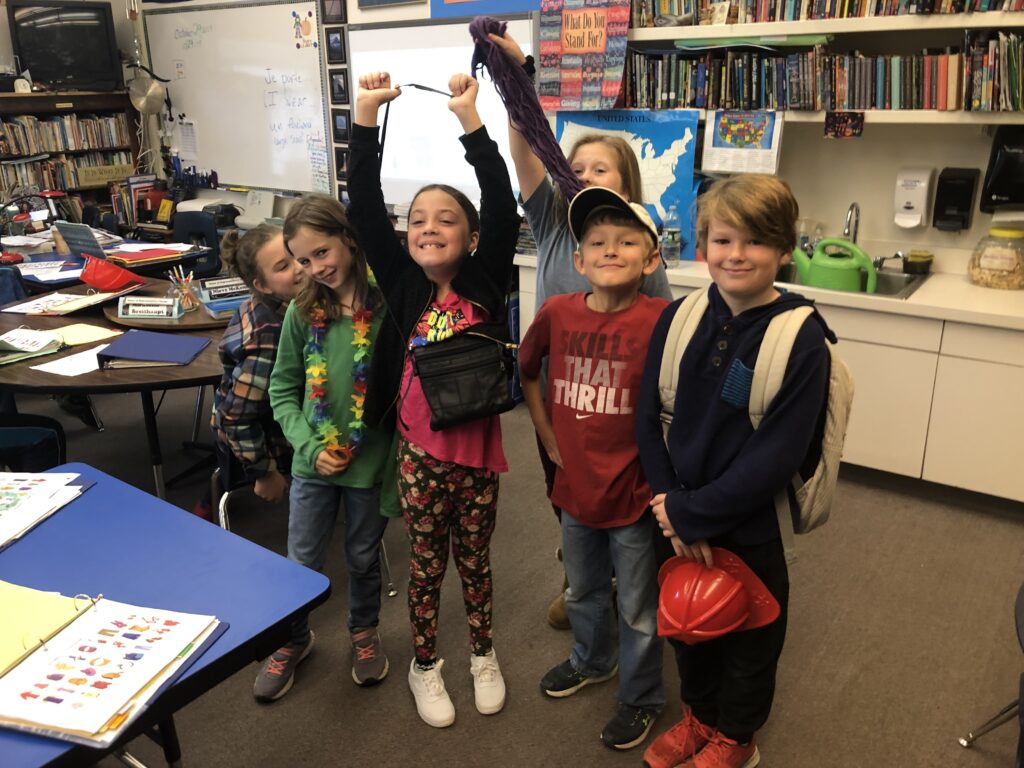
Since 2017, Bennington College has partnered with local schools to provide a range of educational programs for local youth. With help from Noelle Rouxel-Cubberly, Ikuko Yoshida, and other educators from Bennington College, students have the opportunity to teach at local schools through classes, tutorials, and hands-on experience. These programs handle children in grades preschool through sixth, and provide experience in lesson planning, hands-on teaching, and problem-solving. Last week, The Bennington Lens met with several student educators to learn more about the educational programs Bennington College offers local schools.
Like many other language students, Rowan Rondinone, a junior, began their teaching career by taking Rouxel-Cubberly and Yoshida’s “Teaching Languages and Cultures” course during their freshman year at Bennington. Through this course, they began teaching Spanish at the Village School of North Bennington, incorporating the theories, approaches, and experiences taught in the classroom. Recently, Rondinone started teaching 3 classes a week at The Southshire Community School with students of all ages.
Like Bennington, The Southshire Community School is an independent school with small class sizes and less screen exposure, which takes a hands-on approach to learning. Rondinone discussed bringing a Bennington-style education model to the K-8 school: “For Southshire, we do a lot of writing on a chalkboard, making our own posters [and] printed handouts, and we even go on little scavenger hunts around the classroom, and allow students to write up their own short plays and skits in Spanish.”
Laura, a student at Bennington studying French, is deeply involved in the language programs offered at The Village School of North Bennington. Educating students in grades Pre-K through 6th, she develops complex lessons, activities, and games for students to seamlessly learn French. Like Rondinone, Laura has taken “Teaching Languages and Cultures” and is currently taking a tutorial called “Teaching, Mentoring, and Coordinating the Local School Language Program” with Rouxel-Cubberly.
Now in her third term of teaching, she has experience teaching almost every elementary grade and has a grasp on what diverse curricula could look like. Laura begins each lesson with a review of vocabulary and grammar, and leads a warm-up song or dance that students sing along to. “I’d introduce a new topic, and then we would go over some vocab, and what’s really important is scaffolding. This means that you don’t have unrealistic expectations, in a sense it’s where you’re expecting kids to demonstrate productive skills, so that is producing language before they’re demonstrating receptive skills.”
When asked about the future of the program, Laura shared: “I’d love to continue being in the tutorial and teaching for as long as I can. It’s nice to get off campus and be in a different environment. It gives me energy to see how interested the kids are in learning, and it motivates me to continue learning myself across all subjects.”
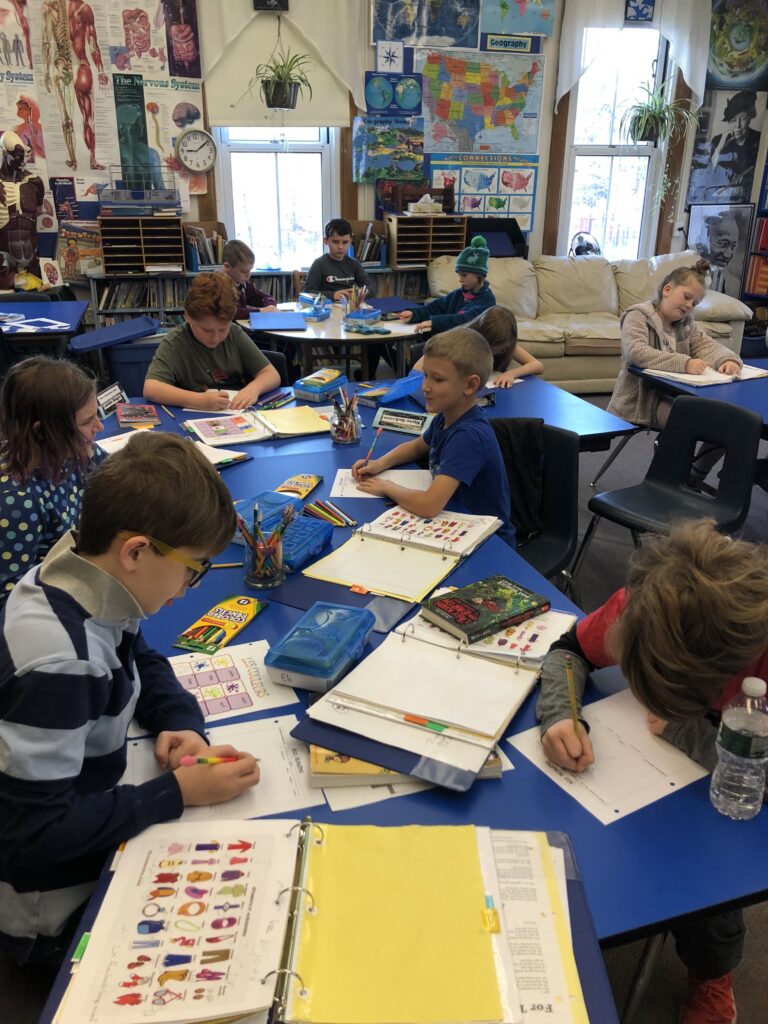
Alongside language programs, Bennington College offers educational courses across subjects including art, music, dance, and conflict resolution at the local schools. Carissa Lombardi, a Bennington senior studying Fine Arts and Restorative Justice, has taught restorative justice at the Village School of North Bennington.
Restorative justice is a practice centered around the principle that all people are inherently good. Through this belief, harm that is done can be repaired through the goodness of others and the desire to make things right in the world. This contrasts with the penal punishment system that is prevalent in American culture and schools. With conflict resolution strengthening in popularity, many schools have adopted conflict resolution programs, as they have shown significant increases in student well-being, as well as classroom, community, and problem-solving skills.
Lombardi said: “I’m interested in looking at it through the education system and through an educational perspective and lens as it relates to young kids, because the way that they’re taught to solve problems through what they’re exposed to in schools and at home really shapes how they turn out later in life.” Each time Lombardi and her peers taught elementary students, they would develop a lesson that correlated to one of the core subjects that they were already learning in school. These lessons included meditations, self-grounding, and community bonding activities.
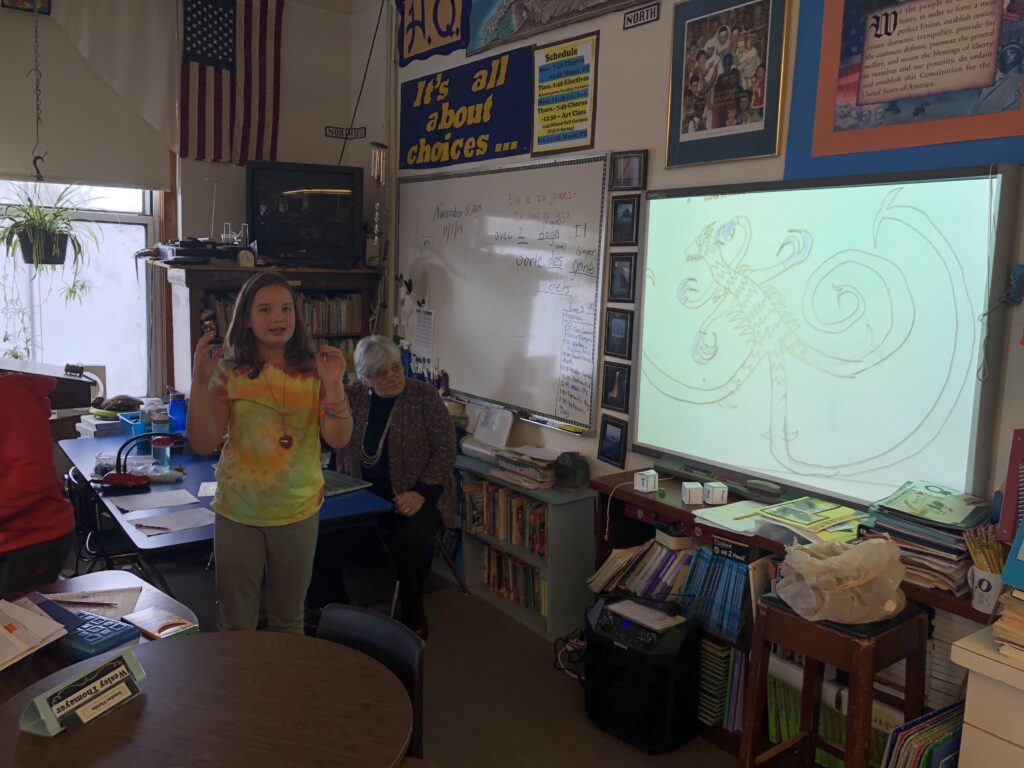
On the importance of incorporating restorative justice into daily life, Lombardi said: “School is important developmentally for students. It’s where they develop their sense of self. If they’re experiencing hardships at home, these kinds of learned behaviors get copied, they get parroted. And oftentimes in schools, that would lead to either harming other kids or harming oneself with the behavior that distracts from learning.”
As a higher education establishment, Bennington College aims to build community by sharing educational resources that both benefit local schools and its students through student-teaching programs.





Be First to Comment