
Boiler Room: Bingham was one of those themes that, when you initially saw it, you probably went: “This hasn’t already been done before? Seriously? Why not?” Because, well, isn’t that what every Bennington party is striving for as of late?
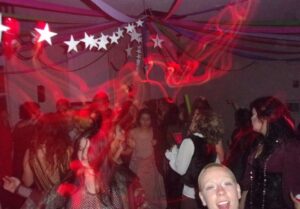
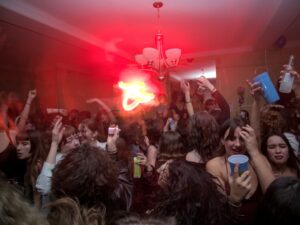
Bingham always brings a reliable partying energy: the floor was never empty, the music remained on-theme and invigorating even past the intended cutoff time at 2 am, and you were never too far from the action even if you went outside due to Bingham’s porch setup. The notable difference between Bingham and its house-architecture buddy, Stokes, is that because of the elevated porch, no one is really encouraged to spill out to the ground outside beyond the porch. The party stays centralized; no one straying too far from either dancing or generally engaging with the party. It might even feel more crowded than it actually was– true or not, it is true that Boiler Room had the theme down pat, even having an accurate amount of sweaty bodies crammed together.
Even if at some point of the night there was an integral part of the house drink missing that made it nearly undrinkable; even if some music was questionable, it never strayed far enough away from committed and high-energy to make for anything less than a good time. Bingham has a well-established structure and enough arguably iconic components that allow you to excitedly anticipate every party they throw while simultaneously never worrying about whether or not it will be good– you know that they’ll have good music all night, DJ sets from people who actually know what they’re doing, and residents who are so into their house that it will never be ill-attended and need an hour to really get going. The residents are one of Bingham’s strong suits, and one of the reasons their parties seem to abruptly, annoyingly end. There will always be some people who stay milling around on the porch or hanging out in the common room after the real action ends– there’s always a chair pulled up for a guest, the promise of a fun night, and an open invitation. At Bingham, you can never really overstay your welcome.

As for Fels’ Saturday night now-annual Eastern Bloc party, they did everything they do best: music that is both good and different, an always high-energy (if not completely packed) dance floor, and a clear vision that avoided all of the typical pitfalls of a Bennington party. It seemed like a party that everyone genuinely wanted to throw—one that was just as much, if not more, for the people who put it on than the community at large.
A Fels party has the same energy as their picnic table out front where people seem to sit, smoke and talk at all hours of the day. It wasn’t for you, exactly, but you were welcome to join if you wanted. Fels loves you in a similar way to your cousin that you “take a walk with” during a family dinner that you may have hated when you were younger because your parents told you he dropped out of community college and was a stoner, or something. They might not love you like a parent or a lover, but you can always count on them for some sort of genuine connection even if you only hang out once every few months.
We’ve already had four 70s house parties this term, which means that, unlike terms past where they were more of a novelty, everyone has the routine down at this point—where to sit, stand, drink. More generally speaking, we’ve reached a point in the term where parties just don’t feel fragile. Show up and dance, or stand around outside the whole time, or repeatedly stop by and leave—it doesn’t matter. It’s cold outside, and getting dark earlier, and most people have nowhere better to be. Attendance will be good, everyone has loosened up enough to have fun dancing, and things will pick up before it’s even midnight and linger on well past the point where the music is turned off. The party is still an event, but it can also just be a backdrop. Which, as much as it might be bad news for the party critic, is decidedly good news for everyone else.




Be First to Comment