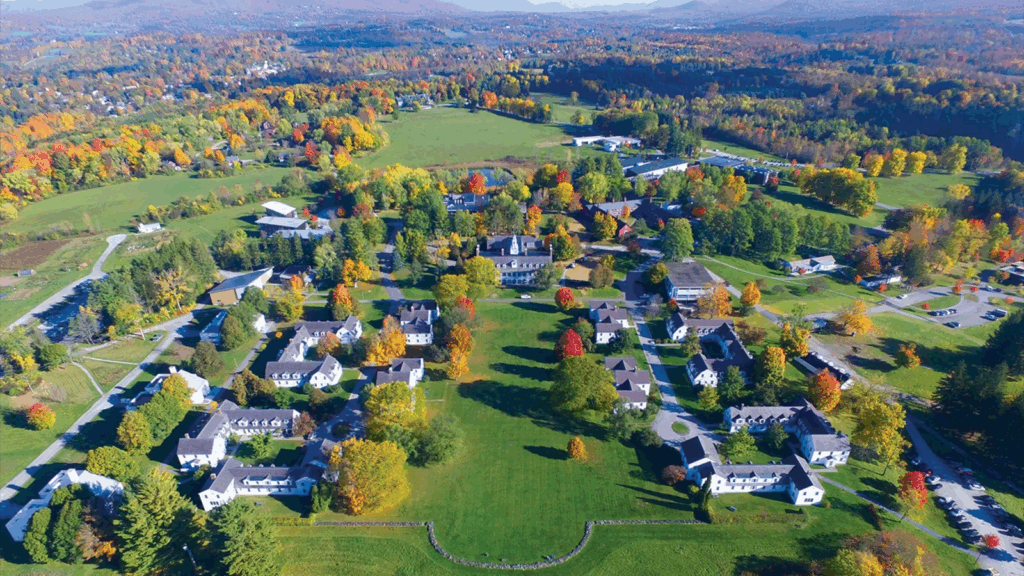
In December 2025, Bennington College launched a new Conservatory for Creative Writing within its Bachelor of Fine Arts (BFA) program. Designed primarily for transfer students, the conservatory also offers pathways for other prospective students who aim to pursue intensive study in fiction, nonfiction, and poetry. “The [program] offers an inclusive and welcoming student-centered conservatory experience with the rigorous scholarship, individualized mentorship, and creative energy one would typically find at the graduate level,” reads the website.
The priority application deadline for rising sophomores and juniors was April 7, with a regular deadline of April 30. The program is co-directed by Michael Dumanis and Jenny Boully. Applicants are required to submit a creative writing portfolio and supporting application materials for consideration.
The conservatory follows a structured three-year curriculum that combines creative writing workshops, craft courses, literature study, and professional development. Students entering as sophomores have greater flexibility to pursue literature and elective coursework alongside the program’s core requirements, while juniors spend their first year completing genre workshops, craft classes, and electives. During their senior year, students complete a yearlong thesis project in close consultation with a faculty advisor. In addition to academic coursework, the program requires two six-week winter Field Work Term internships and two Summer Reading Terms in which students will delve into a curated reading list useful to their craft.
The Lens interviewed co-director Michael Dumanis during the spring term to discuss the vision behind the program, its distinctive curriculum, and what it means for the future of creative writing at Bennington.
When asked about what led to the formation of the program, Dumanis said, “It occurred to me—when the dance BFA came to campus—that there was an opportunity to approach a field of study in different ways. A structured conservatory model could feasibly coexist within the same ecosystem as the BA and the Plan Process.”
While discussions about creating a more focused writing program were already taking place, Dumanis and Boully wanted to avoid replicating existing models. So they envisioned a program that would take advantage of Bennington’s unique resources. “We didn’t want to create a low-residency MFA or something separate from campus life,” Dumanis said. “It would happen here, on this campus, because of opportunities such as the Poetry at Bennington series.”
Transfer students were also a major consideration in the program’s design. Dumanis noted that many transfer students flourish after arriving at Bennington but often face the challenge of navigating the Plan Process while simultaneously building an interdisciplinary course of study. “It occurred to me that so many transfer students thrive at Bennington,” he said. “For some students, preparing a Plan while entering as a junior and building an interdisciplinary focus could be a challenge. We wanted to create another pathway for [transfer] students who are deeply committed to creative writing.”
He notes, “We have one of the strongest academic and creative writing communities in the country. We have an extraordinary track record of students going on to graduate studies in poetry, fiction, and other genres. We also have alumni publishing books five or ten years after graduation, and even recent graduates publishing in places like The New Yorker.”
The conservatory is intended to provide aspiring undergraduate writers with a community of peers and mentors while still allowing room for broader academic exploration.
“There are terrific writers at community colleges and institutions all over the country who want to focus seriously on creative writing,” Dumanis said. “I want students to know the kind of attention and mentorship they’ll receive here. There are multiple writers to work with. Students will come to Bennington to focus on creative writing, but they’ll still have opportunities to study broadly.”
It should be noted that Bennington already has a strong literature and Plan-based system. Creating a “new” program at a place that already has such a strong identity is designed to offer a more concentrated course of study within the literature department. Dumanis says, “The new program is a different approach with the same goal. Students can expect to focus on studying in the same genre. Students will focus on a single genre for four consecutive semesters. The senior project will be tutorial-based. Another idea is that we plan to introduce a professional development class where students will have the opportunity to discuss magazine submissions, the publishing industry, and various approaches to a writing practice.”
“I personally believe the literature faculty at Bennington over the past decade have made transformative decisions that have centered issues of access very intentionally. The BFA tends to be equally committed to what the literature faculty has worked hard to do already,” says Dumanis. “We’ve received transfer applicants in all three genres. We feel positive about them all. If people apply by the deadline, we feel good where things stand right now,” he added.








Be First to Comment