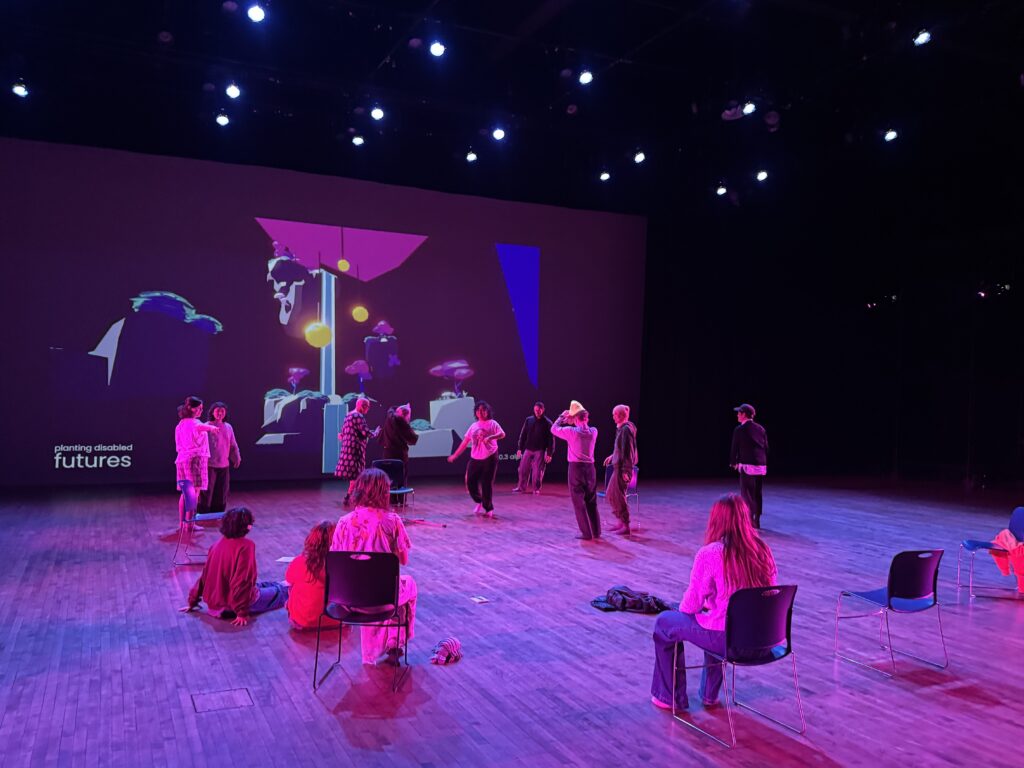
For those interested in engaging with disabled art and experience through virtual reality in a comfortable, creative environment, come to the VR experience of Planting Disabled Futures in the CAPA Faculty Lounge either on Thursday, Feb. 26 from 12:30 to 2:00 pm, and Friday, Feb. 27 from 7:00 to 8:30pm. Email levigonzalez@bennington.edu to reserve a time, as these are only open to small groups!
Walking into the workshop for Planting Disabled Futures in VAPA, I was greeted by Petra Kuppers (she/her), whose matching rose-patterned leggings and cane made her seem right at home in the vivid landscape projected behind her. We gathered in a circle as the camera flew through islands populated by what Kuppers affectionately called “critters,” which ranged from isopods to slime molds. Interspersed with these magical islands were portals, each opening to a different creative film, photo, poem, or other short work by disabled collaborators inspired by their connection to nature.
Before the workshop began, Kuppers and the access doula, Stephanie Heit (she/her), passed around plush critters and asked the group if anyone had additional access needs. As they invited us to sit in chairs, on the floor, or lie down, the needs of our bodies and minds were immediately welcomed and centered. Clearly, Kuppers’ work as a professor of Performance Studies and Disability Culture at the University of Michigan is essential to the perspective of Planting Disabled Futures, which highlights the collaboration, inclusion, and solidarity of disability culture.
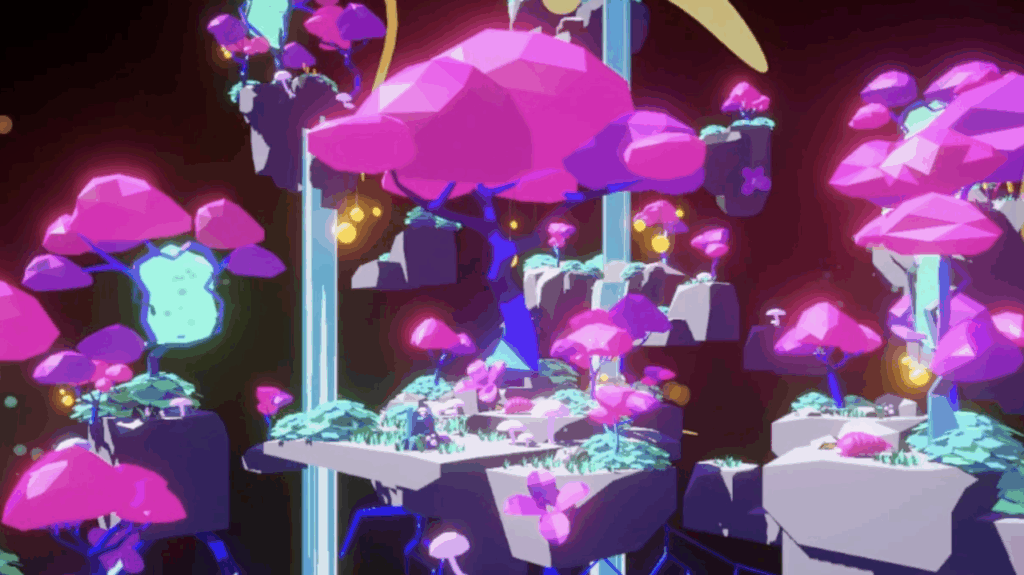
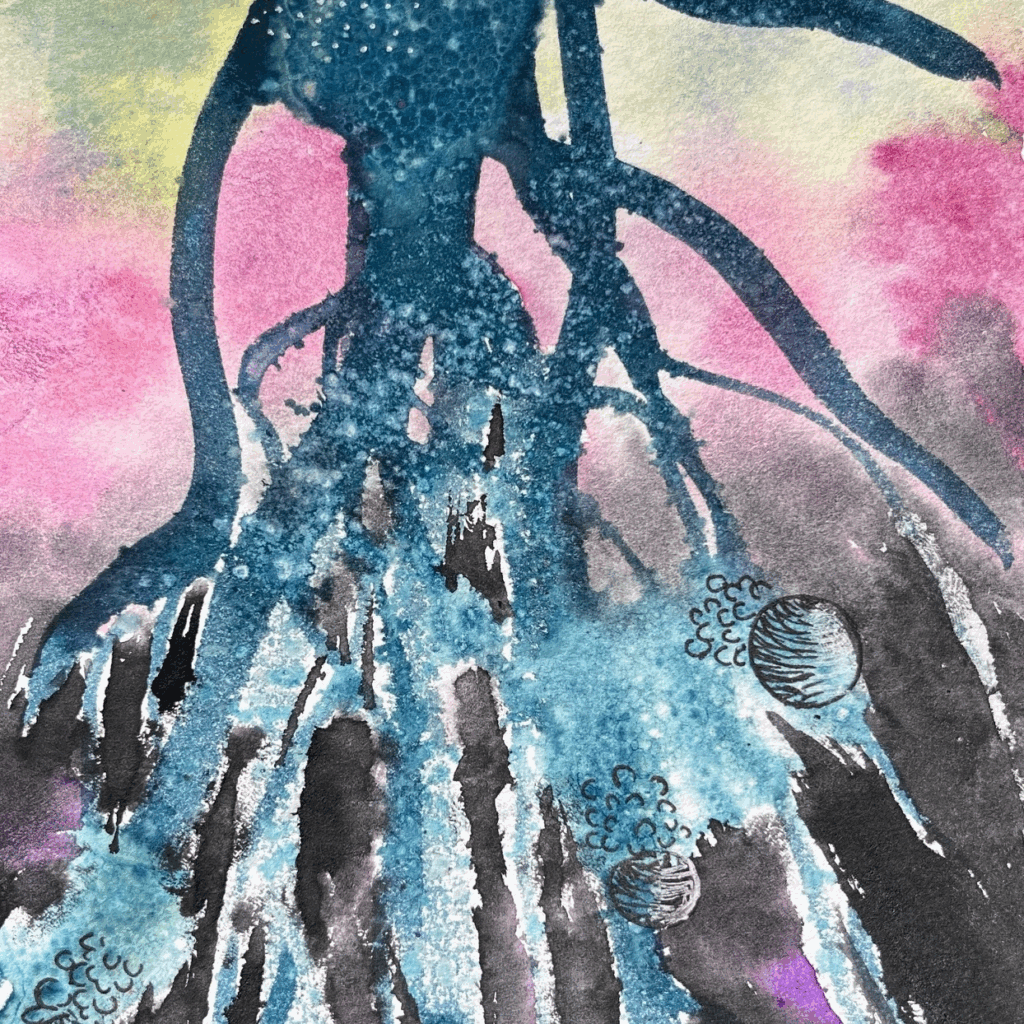
Planting Disabled Futures is Kuppers’ most recent work, connected to the disability-centered artists’ collective and performance research series The Olimpias, as well as the somatic writing studio Turtle Disco which she and Heit co-direct. This specific project was made possible by the Just Tech program, and was inspired by the technological knowledge and practices of disabled people, who have been digitally building community, relationships, and art long before the COVID-19 pandemic brought these methods to the forefront. This project is also inspired by the therapeutic uses of VR, from bed-bound workouts to learning how to use new medical aids. Every step of its creation was collaborative and centered disabled realities as well as the more than human world, including the inception and execution of the islands, which were sketched out in cyanotypes with watercolors, and brought to life by the lead programmer who drew on his perspective as someone with ADHD.
As I and the other participants sat together, awash in the magenta of the stagelights and digital trees, Kuppers spoke about the importance of being in energetic presence with each other, the disabled collaborators in the project, and the world at large. Throughout the workshop we moved through different ways to connect with, share, and be represented by nature: in VR, this sense of intimacy was further heightened, as participants were able to look and move around in the virtual space, as well as utilize a new haptic technology carved on beeswax.
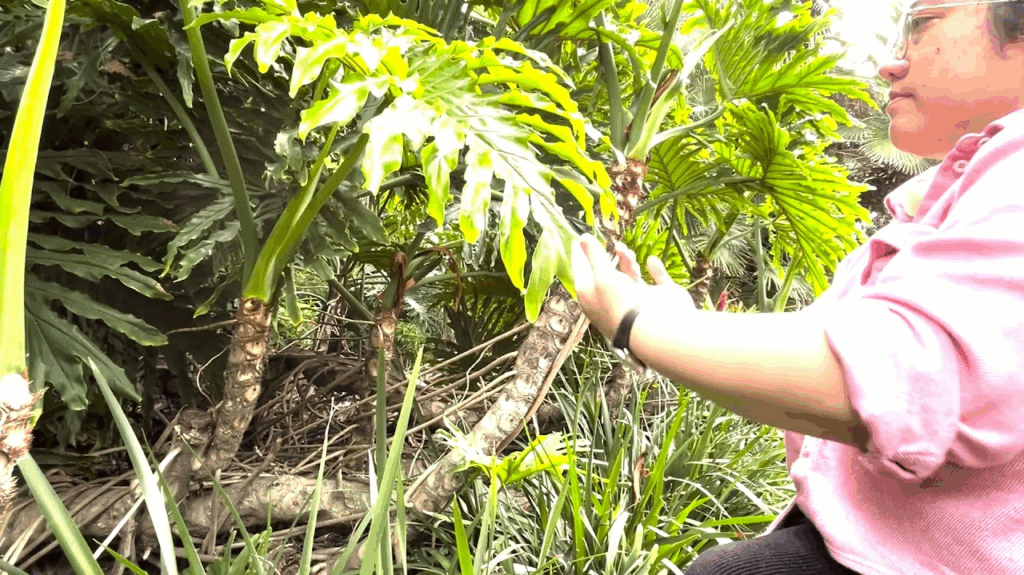
Watching the screen, we entered two different portals, each taking us to a moment in a botanical garden where Kuppers asked her co-conspirators to spend time with their favorite plant. Through short clips, Kuppers transported us to a moment she spent with each participant, a fraction of the afternoon they spent together in “plant-time.” We began in a patch of monstera, where the sounds of a ventilator, birds, a lawn mower, and breathing intermingled as Bonnie Ong, a collaborator on the project, danced her arms with and around the massive leaves. Nature, technology, and body entangled as the camera moved between person and plant.
Then, we visited a green curry tree, interspliced with close-up photos of a painting with swirling text as scientist and artist Ashwini Bhasi read a poem that moved from the greenhouse to her mother’s kitchen in India and back again, connecting her and the plant through the soil they’ve shared moving between countries. Both clips felt like portals into the unique lives, minds, and beauty of different disabled collaborators, with a particular emphasis on other marginalized identities they have, drawing to our attention the intersecting struggles alongside disability justice.
Finally, Kuppers led us in sharing the meaningful plants in our own lives, or plant elders. Each person shared something different: the trees that sheltered them, the weeds that sprang up around their house, or flowers that were brought back to life. Each session of Planting Disabled Futures concludes like this, giving all participants a chance to be part of the project and world, as well as a moment of intimacy that we share.
For those who are interested in exploring this project, and learning more about art and activism in disabled culture and queercrip realities, you can read about the creation of Planting Disabled Futures on Kuppers’ website, and explore the other projects and organizations she’s a part of. In the near future, this world will be uploaded onto Meta, where anyone can access and enter the portals through VR.


Be First to Comment