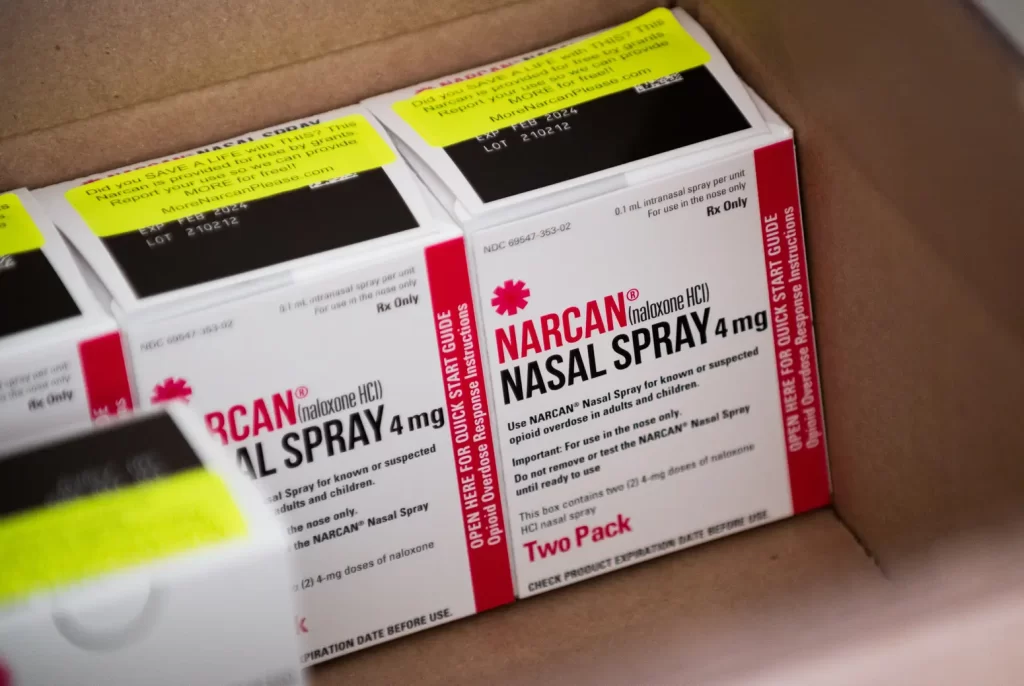
In response to a nation-wide trend of opioid overdoses, Student Council representative Sofia Martinez sponsored a new policy proposal which would improve student access to Narcan on campus.
Since around 2015, the presence of Fentanyl in drugs throughout the country has increased exponentially. A synthetic opioid, fentanyl can cause overdoses at incredibly low doses, and poses considerable risk to drug users; often found mixed in with other drugs, the chance of accidental fentanyl overdose is high. Naloxone (otherwise known by the brand name Narcan) is a widely-available nasal spray which reverses some of the effects of opioid overdoses and can prevent fatalities.
The proposal was written based on data collected from the DEA, Hampshire College and Middlebury College, and calls for the introduction of freely-available Narcan across campus. The product would be found in Commons, Student Center and student housing (including Paran Creek). Stored at each location would be at least two doses of Narcan, instructions for use and a QR code linking to information for recovery and rehabilitation.
The proposal further suggests that the College seek to cultivate a relationship with Turning Point Bennington, a local rehabilitation center. Many colleges have strong working relationships with similar institutions, and the Council believes that the increased availability of Narcan on campus would be a step towards solidifying that association, as well as generally improving student health and safety.
This proposal is the third to be authored by the current Student Council. Its sponsor, Sofia Martinez, joined the Council as a result of the midterm elections held in December alongside freshman representative Yami Antonio.
For Martinez, this situation is deeply personal. In 2021, a childhood friend passed away from an opioid overdose caused by a so-called “fentapill” – a pill secretly laced with fentanyl. Since then, the fentanyl crisis in America has become a very concrete, very immediate danger. Martinez saw the policy proposal – and a role in Student Council in general – as an opportunity to help protect the Bennington community from what she saw to be a pressing threat.
“People think this is something that just happens to drug addicts, and it’s not. If it’s not you, it might be a friend, or a classmate,” Martinez said. “This is something that affects the whole community.”
Currently, the only people on campus with the ability to access Narcan are those trained in its use; currently, that only includes Student Health Center employees, Campus Safety officers, and house chairs. If this proposal is enacted, it would also implement a No Questions Asked policy, under which students could access Narcan and other emergency response products without having to provide any information.
Similar policies are already in place at institutions nationwide. At the University of Texas, for instance, students can simply go to a residence hall or security desk, request Narcan, and get it. For students who fear repercussions for narcotics use, this anonymity can literally make the difference between life and death.
Bennington College, meanwhile, has never had such a policy – in fact, students cannot directly access Narcan at all. If a student needs Narcan, either for themselves or others, they must go through one of the officials trained in its use. If a house chair is asleep, absent, or has simply lost their dose, the student must go further to get it. If that’s the case, Narcan – which has a 15-minute effective period – might be dangerously far out of reach. If the proposal is accepted, then a potentially life-saving dose of Narcan would be available to any student who may need it.
The policy proposal was submitted on Sunday, March 14. As per the guidelines of the Student Council, President Laura Walker will give her response on Friday, March 24th. The text of the proposal is available here.


Be First to Comment